Saturday, 5 May 2012

Well I'm gonna do Dracula instead

At the moment I'm playing catch up with work because of being ill and that means I've not really covered the same amount of The Bloody Chamber as the rest of you (not aided by the book going missing over Easter). So whilst I was off I started taking notes on Dracula, using the text, York Notes and some of my own ideas.
I will do the Bloody Chamber Blog post when I'm happy I'm caught up so don't fear sir, I haven't forgotten

This post is my notes for Chapter one and I'll upload some of the rest when I'm next under pressure for a blog post/ if people request them...

So here it is:


Key Quotes
  • ‘papers’- found in the memoranda at the start.
  • ‘3 May. Bistritz’- diary entry form.
  • ‘a noble of that country’- awareness of status
  • ‘one of the wildest and least known portions of Europe’- ignorance yet also threatening, links to context of worries about the future
  • ‘imaginative whirlpool’- hints of supernatural, being sucked into it…
  • ‘every known superstition in the world’-contempt yet also excitement
  • ‘pictuesque’- word used a lot by Jonathan, highlighting the beauty in danger?
  • ‘almost too tight for modesty’- awareness of the female form. Male judgement about female, no comment on the fact that he is looking. Hints at Stoker’s patriarchal views.
  • ‘Sleep well tonight’-(Count’s instruction) ironic Jonathan slept badly night before (suggests Count’s insight) and will sleep badly thereon in.
  • ‘all the evil things in the world will have full sway’- Very Gothic, power tables turned
  • ‘an English Churchman’- Protestant. Complete rejection of superstition in religion.
  • ‘Satan’, ‘hell’, ‘witch’, ‘were-wolf or vampire’- semantic field of gothic monsters/ religious demons combines pagan and religious fears- hinting at D being anti Christ.
  • ‘old missals’- form of prayer book associated with the Catholic church. Interesting that Jonathan associates the towns with these as an ‘English Churchman’
  • ‘little towns or castles on the top of steep hills’-High up, realistic imagery, closer to God- escape the evil? FREUD.
  • ‘the evil eye’- superstition. Link between eye and soul therefore corruption of soul.
  • ‘odd and varied gifts’- things that Harker’s fellow passengers on the Coach give him
  • ‘If this book should ever reach Mina before I do, let it bring my good-bye’- shows just how far Jonathan’s uneasiness has come.
  • ‘There were dark, rolling clouds ahead’- Pathetic fallacy. Sets mood for danger.
  • ‘Czechs and Slovaks all in picturesque attire… that goitre was painfully prevalent”- a lot of the locals are carrying injured necks but Jonathan doesn’t make the connection. Not helped by his inability to make a distinction between were-wolf and vampire.
  • ‘The women looked pretty, except when you got near them’- again a form of voyeurism /awareness of femininity. Women just like the setting- appear nice but actually dangerous?
  • ‘sort of awful nightmare.’-  exactly what it is.
  • ‘he did not obstruct it, for I could see it’s ghostly flicker all the same’- irony here- he’s the ghostly one.
  • ‘As he swept his long arms, as though brushing aside some impalpable obstacle, the wolves fell back’.- super human. One does not simply tame beasts as if they are a mere nuisance.

Memoranda at Start

Note before the tale of Dracula, presented through diary entries begins. Reassures reader that the ‘papers’ are reliable and of historical truth (Verisimilitude).
  • Starts with question of who wrote the note?- unsettling and undermines the authoritative assurances of the memoranda.
  • Tone of the note is understated- hinting at the horror to come yet also has a kind of secretarial feel about it.

Summary of Events

    1. Harker begins his diary entry concerned with ordinary ailments.
    2. We discover he has done some research into the lands he is preparing to travel to at the British museum.
    3. Enjoys some ‘picturesque’ scenery and stops at an inn.
    4. People start getting iffy the closer he gets to the Count’s castle, especially with it being St George’s Day.
    5. Woman gives Harker the rosary beads.
    6. People pity Jonathan en route. Ward against the evil eye and he can hear murmurs about Gothic monsters.
    7. People urge coach driver to speed. Journey becomes increasingly frantic.
    8. Coach driver arrives an hour early and tells JH he’ll have to return tomorrow when the Count’s carriage arrives.
    9. JH has a frightening and startling journey to the castle with nightmarish imagery and loss of time.
    10. Coach stops at the castle.
General Analysis
  • Chapter 1 sets the tone and form of the book. The memoranda combined with JH’s diary entry/ words to Mina make the novel an epistolary novel – one where the story is told through messages from one character to another and the reader has to play detective and work out from the subtext the story.
  • Starts with the incredibly mundane- late running trains, “train was an hour late” and unusual food “it may have been the paprika”. Can attribute therefore the first diary entry as being part diary and part memoir. The incompetence of the railways/ strangeness of the food emphasises the difference in culture and Jonathan’s lack of familiarity with it. In Victorian times the West was considered civilised, the East uncivilised and places like Transylvania as a kind of halfway-house between the two. Therefore this is all ironic preparation into Jonathan’s real journey into the realms of the unknown.
  • Eastern setting and train delays also signify how time is not important in the regions that Jonathan has been sent to work in. These areas operate on rules that are alien to Jonathan and so he can’t look to objective standards to make his experience seem reliable.
  • Harker’s background knowledge into the troubled pasts of the regions that he is travelling in brings excitement to the narrative, both in the imagination of Harker and the reader as the lands seem somewhat unknown and dangerous.
  • Theme of female sexuality introduced early on in the novel through Jonathan’s judgement about the innkeeper’s wife’s apron.
  • People become more and more uncommunicative the closer Jonathan gets to the Count’s Castle. They also become more and more superstitious talking about the power of evil on St George’s day. There is a clash of superstitions when a woman offers Jonathan some rosary beads to protect him as this would be considered idolatrous by an ‘English Churchman’. Links religion to superstition and perhaps even hints at corruption of religion by superstition. Nonetheless Jonathan accepts symbolising religious faith of all kinds must be used against the forces of evil Dracula represents.
  • Jonathan’s mixed feeling about the people using a range of religious and superstitious practices to try and protect him shows start of uncertainty in book. Jonathan asserts he is an ‘English Churchman’ but has already accepted rosary beads and feels touched by the people’s concern. Suggests he’s starting to question the protection his faith can offer him in the near future.
  • Nightmare imagery from the moment that Jonathan steps into the Count’s carriage. Blue flames are strange and startling and Harker even thinks that under their light he can see through the driver’s body. Houling of wolves and the point where the carriage is surrounded by wolves is also v. scary. Loses track of time- suddenly it is midnight. Loss of source of objectivity into the confusing, distorted dream realm that Dracula dominates.
  • Chapter finishes at the Castle. Stereotypical gothic setting, links to Freudian imagery.
  • Note at the start of the Chapter says that the diary has been kept in short hand. Suggests that Harker has something to hide and only wants it to be shown to someone who knows how to write shorthand and can understand it to transcribe it.
  • Journey represents move away from domestic bliss (Mina) to danger. Transition highlighted from Harker admiring the picturesque beauty of the region to fearing the startling dangers of the region and him becoming increasingly uneasy.

Monday, 26 March 2012

The Green Man


Green Man
 

This post is going to be entirely written in green to pay tribute to 'The Green Man'. 
The green man is basically a human head with a mass of leaves around it or coming from it. It can often be found decorating old buildings, particularly churches and gravestones. The earliest Green Man that is known of dates from the 2nd century and was found on a monument to a dead rich citizen. From the 4th century they have been known to be found on christian gravestones and monuments too.


A Jack-in-the-Green
The Green Man has its origins in pagan beliefs, with many being discovered in Britain before the widespread adoption of Christianity as the religion of the Britons. It is interesting that Christianity did choose to adopt the green man as a kind of symbol of its own. Some argue that Christians use it as a mark on their gravestones to symbolise the different stages of life- birth, life and death- and how Christianity or faith can overcome nature.


In the 19th century the Green Man became associated with May Day celebrations, particularly those of the Chimney Sweeps. As May Day is a bank holiday, the chimney sweeps would have a day off and would participate in the festivities (as well as earning a little extra cash through begging) by dancing round a Jack-in-the-Green in a morris dancing fashion. The Jack-in-the-Green would be made out of wicker and leaves and would have a real man inside!


The most modern reinvention of the Green Man is in the Green Man festival down in of course... Wales. It's a folk festival (again of course). Doesn't truly have anything to do with the tradition of the Green Man but I thought it was interesting. Here's a link in case any of you fancy going or just looking at modern day Green Men: www.greenman.net
There's also a Jack-in-the-Green festival on May Day in Hastings. Please actually do check out this website for some true Jack-in-the-Green antics (complete with the mandatory folk musical) : http://www.hastingsjack.co.uk/


Saturday, 10 March 2012

Commedia dell'arte Characters

A list of characters to be found in the old Italian genre of theatre that apparently links to Carter's reinvention of Puss in Boots (I can't help but hear Antonio Banderes' voice whenever I type/read that).

As Carter was a feminist and because girls are better than boys here are the female characters first:

  • Columbina "little dove"- mistress of Harlequin and wife of Pierrot. She is a comic, 'tricky', servant who is described as often being the only 'functional intellect on stage' (wiki)
  • Isabella (a female inamorata). Isabella is Pantalone's daughter and is depicted as being flirtatious and headstrong, constantly trying to escape her controlling father's attempts to set her up with an older suitor. Most of the commedia dell'arte plays are about trying to get the lovers (Isabella and Flavio) together.
  • La Ruffiana- An old lady character who used to be a prostitute. Nice. Pantalone is often romantically linked to her but his love can be unrequited. At times she is depicted as a witch (to make things interesting)
  • La Signora- A beautiful self assured woman driven by her desires to be fulfilled materially and sexually. Sometimes she is depicted as being Pantalone's wife, at others she is a high class courtesan (prostitute).
Male Characters:
  • Pantalone- Is the symbol of money in Commedia. Driven completely by money and ego Pantalone prizes intelligence highly. He is often the father of one of the two lovers (Isabella) and the man who depicts him does so hunchbacked to make him appear old.
  • Il Dottore "The doctor"- Crude character that is an old man that claims to know everything about everything. Will not listen to experts in the fields that he claims to have knowledge about. Often one of the elder male characters that gets in the way of the two lovers being together. Has 'old' money.
  • Tartaglia- The stutterer. An older male character that is given different ranks dependent on the play, ranging from servant to statesman.
  • Scaramouche- Rouge like clown. Always wears black (a bit of a goth). An iconic character in the Punch and Judy puppet shows used in Commedia.
  • Harlequin- A servant of one of the vecchio, known for his agility, gets in the way of the Vecchio's plans.
  • Male lover- no point having a female lover without a male one. Usually called Flavio.

Monday, 27 February 2012

A nice bit of sex and violence...or not.

Well, we were asked to annotate pages 18-26 of The Bloody Chamber for our homework and after having done this write a blog post on something that caught our interest in the aforementioned passage. Really there were two things that caught my interest the most so here they are:

The imagery of the of the corridor leading towards the torture chamber is really interesting as the passage foreshadows to the reader what the narrator might expect to find in her husband's locked "den". The "Venetian, tapestries" depict images of violence with, "naked swords" and "immolated horses" which the narrator recognizes as "the Rape of the Sabines". The combination and association of violence and sexuality is certainly one that can be recognized in the narrator's husbands sexual tastes, with rape potentially being a climax in sexual ambition for him. The fact that the narrator recognizes the tapestry suggests that she is not quite so naive as the reader (and perhaps even herself) has been lead to believe up untill this point. The purpose behind the tapestries is interesting too as it is to hide what the very tapestries themselves show. The narrator describes how the "heavy hangings on the wall muffled my footsteps"  and the floor is "thickly carpeted". When I initially read The Bloody Chamber (not knowing there was going to be a torture chamber) this sent alarm bells ringing in my head as I recognized that the tapestries and the carpet serve to soundproof the corridor. The screams of the Marquis' victims would be audible were it not for the tapestries and carpets so their function ironically covers up in real life what it depicts in a corrupt fantasy. Pleasant stuff.

On a slightly more light hearted note- I think that the servants are definitely in on the whole torture chamber thing. They at least suspect if not know what the Marquis does to his wives. Evidence in the such as, "How careless I was; a maid, tending the logs, eyed me reproachfully as if I'd set a trap for her as I picked up the clinking bundle of keys" and "I knew by her bereft intonation that I had let them down again" certainly suggest that the servants are aware of the horrors that the keys connote. I think that the servants probably are the mechanism that the Marquis uses to spy on his wife and who keep him informed so that he can arrive back at the perfect time. One could argue that the "reproachful" look of the maid servant actually shows pity for the narrator in her naivety, yet also duty to inform the master which could be the "trap".

Just some ramblings, that's all till next lesson folks...

Wednesday, 15 February 2012

Mulvey's Visual Pleasure and Narrative Cinema

Well, I've just been trying to read up on this topic, and I must confess, it is quite difficult. I initially started at Mulvey's article itself. Big mistake. Then through a synthesis of wikipedia and someone else's blog I think I understand the basics of the theory. It is very strange though.

Essentially the premises of Mulvey's argument are as follows ( I think):
P1: The woman represents the male other as she has no phallus.
P2: The lack of phallus stirs up anxiety about castration in men when they see women.
P3. HOWEVER men do get sexually aroused when they see a woman (little paradox here)
P4: Mainstream Hollywood allows the audience the opportunity to partake in vouyerism via the male lead thus OBJECTIFYING WOMEN (V.BAD)

There are 3 perspectives from which the female lead can be objectifyed:
1) The male lead's reaction to the female lead
2) The audience towards the female lead
3)The male audience relating to the male lead, allowing the female lead to become the male audience attendee's own sex object.

In all this it is important to remember that the woman is the bearer of meaning and not the maker, although this is where tha paradox of phallocentricism kicks in as the meaning of the phallus is dependent on the existence of females. Males would not see and assert their superiority if there were no women as they would not see the lack of phallus as a weakness as it would not be an option.

'Tis all very strange, and as I'm sure you can tell by the lack of coherency in this blog I don't understand the theory fully. It does all rest on Freud's psychoanalysis as a backdrop which as we all know is a little strange to say the least. However, I do agree that far too often the only point of the female leads is their beauty (shown through the ridiculous number of female leads in Hollywood) and thus the point of their role is merely soft pornography for the male audience members.
This could be adressed 3 ways:
1) Banning men from the movies (just silly)
2) More 'character' female leads i.e. hiring women that can act and don't just have beautiful legs
3) Continue doing what Hollywood is doing at the moment and hire more beautiful men, Mulvey doesn't explore female objectification of men in her essay and as long as the objectification is equal I don't have quite the problem with it.

Anyhow just some thoughts on a very strange homework task. Hope everyone's having a nice half-term :)

Wednesday, 8 February 2012

Blue Beard in 314 words exactamondo!

The ugly aristocrat ‘Bluebeard’ wants a wife. All of the girls in the area know that all his other wives have disappeared and are scared (but lets face it the blue beard wasn’t a turn on either). He asks to marry one of his neighbour’s two daughters which is apparently ok with their Dad. Eventually, one cracks goes to the palace is wooed by a banquet and stupidly says, “Yes” to marriage. Silly girl. Then they get married and she has a happy life in his Chateau… Jokes.
Bluebeard goes away for a few days and gives his latest prey the keys to his castle, telling her to have fun. He also gives her another key and tells her it opens a mysterious room in the cellar that she must open. The wife enjoys his absence and even throws a few house parties, cheeky thing. HOWEVER, she really wants to know what’s in the room and ignores her sensible sister’s advice to stay away and goes down into the cellar. In the cellar she discovers that curiosity didn’t kill the cat but the other wives!!! In her horror she drops the key in the blood that covers the floor and can’t wash the blood off!
Anyhow, she decides to run away with her sis the next morning but Bluebeard returns unexpectedly (should have just left when she saw the bodies). Bluebeard sees that she knows his secret and is about to behead her when she persuades him to give her 15 minutes to say her prayers. The wife runs up to the highest turret in the tower and locks herself in with her sis. Bluebeard, going crazy with his sword, is about to break down the door, but the girls have managed to call their two brothers (with what? A mobile?). The brave boys kill Bluebeard. The wife inherits and they have a party.

Sunday, 5 February 2012

Second Wave of Feminism


Sooooo, as some of you might know/ have a tiny weeny little incling, I am a feminist. So when Mr Francis said look second wave of feminism I was like 'Wooooooo' 'Yeahhhhh' (well a little bit more excited and less sarcastic then that looks in print). Angela Carter is a feminist and The Bloody Chamber is  basically setting Fairytales in a Matriarchy in essensce. Role reversal. 'How would you like it?' fashion. And this is a good thing, let us not forget that even though the publication of The Bloody Chamber may have come in 1979, towards the end of the big second wave of feminism, 33 years later we still live in a patriarchy. Great.
This post could just turn into me having a big moan, but we've been told to look for images of the second wave of feminism so I've been racking my brains to see what I can come up with...


The Society for Cutting Up Men

Andy Warhol after being shot by Valerie Solanas


I'm not personally a fan but...


Equal Pay Campaign!


Changelings

Well, seeing as we have been asked to blog on an aspect of fairytales that interests us, I've decided to blog about Changelings as they combine two key things in fairy tales- fairies and children.

Fairytales are meant to convey moral messages to their readerships. They are essentially a collection of folklore tales amalgamated from a variety of different sources across Europe. A lot of the now famous tales were very dark when they were composed as they were told mainly to adults, not children. It was only in the Victorian era that fairytales were deemed to be more appropriate for a child audience and their content was tuned down. Interestingly, the sexual nature of fairy tales was reduced, an example of this is in Rapunzel when the witch notices the Prince's visits because Rapunzel's clothes have become tighter (she's pregnant!!) not because Rapunzel remarks that the witch weighs more than the witch.

I think that we now teach fairytales to a child audience, albeit usually via the media of Disney, because in the 21st Century adults cannot suspend their disbelief to the same extent that a child who believes in fairies can. It also provides a great medium for conveying morals to children, learning through storytelling. However, going back in time many people were very superstitious. Back in medieval times it would not be uncommon for people to believe in witches, fairies or ogres- partially because of the lack of travel that people did, they never fully explored their worlds.

How does this all lead me on to Changelings? Well children are a recurrent theme in fairytales, they often play the lead roles and a lot of the strife that occurs in the stories results from children leaving home. Back in t'olden days people would try and explain the disapperances of children as being the work of the fairies. In some circumstances the fairies would take the children without replacing them, this might be used to explain a child disappearance. In other circumstances, the fairies would switch the children with fairy children- hence changelings. Changelings helped to explain things that medical science at the time couldn't, many parents who had children with disabilities both physical and mental believed that their original child had been switched. Unfortunately, the rejection that is also associated with changelings would mean that some parents wouldn't acknowledge the child and would leave it outside untill it died. :(. I'm not sure whether the concept of changelings is derived from people hearing fairytales or vice versa but either way it is a sad, albeit mystical explanation for the feeling of or actually losing a child. Examples in literature of changelings are huge, one famous example is that when Titannia and Oberon are fighting over a human child (which Titannia has presumably switched) in A Midsummer Night's Dream.

I also mentioned that my dad often played a song about fairies taking children last lesson. I knew it was a poem put to music but couldn't remember who wrote the poem, what it was called and who put it to music. The poem/ song is called "The Stolen Child" and was written by W.B. Yeats in 1889 (ok- famous poet, should have known him really). It is based on Irish legend and folklore. The poem was put to music by The Waterboys and here is the video below, enjoy!

Monday, 30 January 2012

Long Time no Blog

So... I haven't blogged in a while, and Mr Francis wants us to bring in a fairytale to read tomorrow so I thought I'd post my favourite on here. When I was a little girl my favourite fairytale was always Hansel and Gretel, probably because of the edible ginger bread house, so here it is:

Hansel and Gretel
Hard by a great forest dwelt a poor wood-cutter with his wife and his two children. The boy was called Hansel and the girl Gretel. He had little to bite and to break, and once, when great dearth fell on the land, he could no longer procure even daily bread.
     Now when he thought over this by night in his bed, and tossed about in his anxiety. He groaned and said to his wife, "What is to become of us? How are we to feed our poor children, when we no longer have anything even for ourselves?"
     "I'll tell you what, husband," answered the woman, "early tomorrow morning we will take the children out into the forest to where it is the thickest. There we will light a fire for them, and give each of them one more piece of bread, and then we will go to our work and leave them alone. They will not find the way home again, and we shall be rid of them."
     "No, wife," said the man, "I will not do that. How can I bear to leave my children alone in the forest? The wild animals would soon come and tear them to pieces."
     "Oh! you fool," said she, "then we must all four die of hunger, you may as well plane the planks for our coffins," and she left him no peace until he consented.
     "But I feel very sorry for the poor children, all the same," said the man.
     The two children had also not been able to sleep for hunger, and had heard what their step-mother had said to their father. Gretel wept bitter tears, and said to Hansel, "Now all is over with us."
     "Be quiet, Gretel," said Hansel, "do not distress yourself, I will soon find a way to help us." And when the old folks had fallen asleep, he got up, put on his little coat, opened the door below, and crept outside.
<  2  >
     The moon shone brightly, and the white pebbles which lay in front of the house glittered like real silver pennies. Hansel stooped and stuffed the little pocket of his coat with as many as he could get in. Then he went back and said to Gretel, "Be comforted, dear little sister, and sleep in peace, God will not forsake us," and he lay down again in his bed.
     When day dawned, but before the sun had risen, the woman came and awoke the two children, saying, "Get up, you sluggards. We are going into the forest to fetch wood." She gave each a little piece of bread, and said, "There is something for your dinner, but do not eat it up before then, for you will get nothing else."
     Gretel took the bread under her apron, as Hansel had the pebbles in his pocket. Then they all set out together on the way to the forest.
     When they had walked a short time, Hansel stood still and peeped back at the house, and did so again and again. His father said, "Hansel, what are you looking at there and staying behind for? Pay attention, and do not forget how to use your legs."
     "Ah, father," said Hansel, "I am looking at my little white cat, which is sitting up on the roof, and wants to say good-bye to me."
     The wife said, "Fool, that is not your little cat, that is the morning sun which is shining on the chimneys."
     Hansel, however, had not been looking back at the cat, but had been constantly throwing one of the white pebble-stones out of his pocket on the road.
     When they had reached the middle of the forest, the father said, "Now, children, pile up some wood, and I will light a fire that you may not be cold."
     Hansel and Gretel gathered brushwood together, as high as a little hill. The brushwood was lighted, and when the flames were burning very high, the woman said, "Now, children, lay yourselves down by the fire and rest, we will go into the forest and cut some wood. When we have done, we will come back and fetch you away."
<  3  >
     Hansel and Gretel sat by the fire, and when noon came, each ate a little piece of bread, and as they heard the strokes of the wood-axe they believed that their father was near. It was not the axe, however, but a branch which he had fastened to a withered tree which the wind was blowing backwards and forwards. And as they had been sitting such a long time, their eyes closed with fatigue, and they fell fast asleep.
     When at last they awoke, it was already dark night. Gretel began to cry and said, "How are we to get out of the forest now?"
     But Hansel comforted her and said, "Just wait a little, until the moon has risen, and then we will soon find the way." And when the full moon had risen, Hansel took his little sister by the hand, and followed the pebbles which shone like newly-coined silver pieces, and showed them the way.
     They walked the whole night long, and by break of day came once more to their father's house. They knocked at the door, and when the woman opened it and saw that it was Hansel and Gretel, she said, "You naughty children, why have you slept so long in the forest? We thought you were never coming back at all."
     The father, however, rejoiced, for it had cut him to the heart to leave them behind alone.
     Not long afterwards, there was once more great dearth throughout the land, and the children heard their mother saying at night to their father:
     "Everything is eaten again, we have one half loaf left, and that is the end. The children must go, we will take them farther into the wood, so that they will not find their way out again. There is no other means of saving ourselves."
     The man's heart was heavy, and he thought, "It would be better for you to share the last mouthful with your children." The woman, however, would listen to nothing that he had to say, but scolded and reproached him. He who says a must say b, likewise, and as he had yielded the first time, he had to do so a second time also.
<  4  >
     The children, however, were still awake and had heard the conversation. When the old folks were asleep, Hansel again got up, and wanted to go out and pick up pebbles as he had done before, but the woman had locked the door, and Hansel could not get out. Nevertheless he comforted his little sister, and said, "Do not cry, Gretel, go to sleep quietly, the good God will help us."
     Early in the morning came the woman, and took the children out of their beds. Their piece of bread was given to them, but it was still smaller than the time before. On the way into the forest Hansel crumbled his in his pocket, and often stood still and threw a morsel on the ground.
     "Hansel, why do you stop and look round?" Said the father. "Go on."
     "I am looking back at my little pigeon which is sitting on the roof, and wants to say good-bye to me, answered Hansel.
     "Fool." Said the woman, "That is not your little pigeon, that is the morning sun that is shining on the chimney."
     Hansel, however, little by little, threw all the crumbs on the path. The woman led the children still deeper into the forest, where they had never in their lives been before.
     Then a great fire was again made, and the mother said, "Just sit there, you children, and when you are tired you may sleep a little. We are going into the forest to cut wood, and in the evening when we are done, we will come and fetch you away."
     When it was noon, Gretel shared her piece of bread with Hansel, who had scattered his by the way. Then they fell asleep and evening passed, but no one came to the poor children.
     They did not awake until it was dark night, and Hansel comforted his little sister and said, "Just wait, Gretel, until the moon rises, and then we shall see the crumbs of bread which I have strewn about, they will show us our way home again."
<  5  >
     When the moon came they set out, but they found no crumbs, for the many thousands of birds which fly about in the woods and fields had picked them all up. Hansel said to Gretel, "We shall soon find the way."
     But they did not find it. They walked the whole night and all the next day too from morning till evening, but they did not get out of the forest, and were very hungry, for they had nothing to eat but two or three berries, which grew on the ground. And as they were so weary that their legs would carry them no longer, they lay down beneath a tree and fell asleep.
     It was now three mornings since they had left their father's house. They began to walk again, but they always came deeper into the forest, and if help did not come soon, they must die of hunger and weariness. When it was mid-day, they saw a beautiful snow-white bird sitting on a bough, which sang so delightfully that they stood still and listened to it. And when its song was over, it spread its wings and flew away before them, and they followed it until they reached a little house, on the roof of which it alighted. And when they approached the little house they saw that it was built of bread and covered with cakes, but that the windows were of clear sugar.
     "We will set to work on that," said Hansel, "and have a good meal. I will eat a bit of the roof, and you Gretel, can eat some of the window, it will taste sweet."
     Hansel reached up above, and broke off a little of the roof to try how it tasted, and Gretel leant against the window and nibbled at the panes. Then a soft voice cried from the parlor -
     "Nibble, nibble, gnaw
     who is nibbling at my little house?"
<  6  >
     The children answered -
     "The wind, the wind,
     the heaven-born wind,"
     and went on eating without disturbing themselves. Hansel, who liked the taste of the roof, tore down a great piece of it, and Gretel pushed out the whole of one round window-pane, sat down, and enjoyed herself with it.
     Suddenly the door opened, and a woman as old as the hills, who supported herself on crutches, came creeping out. Hansel and Gretel were so terribly frightened that they let fall what they had in their hands.
     The old woman, however, nodded her head, and said, "Oh, you dear children, who has brought you here? Do come in, and stay with me. No harm shall happen to you."
     She took them both by the hand, and led them into her little house. Then good food was set before them, milk and pancakes, with sugar, apples, and nuts. Afterwards two pretty little beds were covered with clean white linen, and Hansel and Gretel lay down in them, and thought they were in heaven.
     The old woman had only pretended to be so kind. She was in reality a wicked witch, who lay in wait for children, and had only built the little house of bread in order to entice them there. When a child fell into her power, she killed it, cooked and ate it, and that was a feast day with her. Witches have red eyes, and cannot see far, but they have a keen scent like the beasts, and are aware when human beings draw near. When Hansel and Gretel came into her neighborhood, she laughed with malice, and said mockingly, "I have them, they shall not escape me again."
     Early in the morning before the children were awake, she was already up, and when she saw both of them sleeping and looking so pretty, with their plump and rosy cheeks, she muttered to herself, that will be a dainty mouthful.
<  7  >
     Then she seized Hansel with her shrivelled hand, carried him into a little stable, and locked him in behind a grated door. Scream as he might, it would not help him. Then she went to Gretel, shook her till she awoke, and cried, "Get up, lazy thing, fetch some water, and cook something good for your brother, he is in the stable outside, and is to be made fat. When he is fat, I will eat him."
     Gretel began to weep bitterly, but it was all in vain, for she was forced to do what the wicked witch commanded. And now the best food was cooked for poor Hansel, but Gretel got nothing but crab-shells. Every morning the woman crept to the little stable, and cried, "Hansel, stretch out your finger that I may feel if you will soon be fat."
     Hansel, however, stretched out a little bone to her, and the old woman, who had dim eyes, could not see it, and thought it was Hansel's finger, and was astonished that there was no way of fattening him.
     When four weeks had gone by, and Hansel still remained thin, she was seized with impatience and would not wait any longer.
     "Now, then, Gretel," she cried to the girl, "stir yourself, and bring some water. Let Hansel be fat or lean, to-morrow I will kill him, and cook him."
     Ah, how the poor little sister did lament when she had to fetch the water, and how her tears did flow down her cheeks. "Dear God, do help us," she cried. "If the wild beasts in the forest had but devoured us, we should at any rate have died together."
     "Just keep your noise to yourself," said the old woman, "it won't help you at all."
     Early in the morning, Gretel had to go out and hang up the cauldron with the water, and light the fire.
<  8  >
     "We will bake first," said the old woman, "I have already heated the oven, and kneaded the dough." She pushed poor Gretel out to the oven, from which flames of fire were already darting. "Creep in," said the witch, "and see if it properly heated, so that we can put the bread in." And once Gretel was inside, she intended to shut the oven and let her bake in it, and then she would eat her, too.
     But Gretel saw what she had in mind, and said, "I do not know how I am to do it. How do I get in?"
     "Silly goose," said the old woman, "the door is big enough. Just look, I can get in myself." And she crept up and thrust her head into the oven.
     Then Gretel gave her a push that drove her far into it, and shut the iron door, and fastened the bolt. Oh. Then she began to howl quite horribly, but Gretel ran away, and the godless witch was miserably burnt to death. Gretel, however, ran like lightning to Hansel, opened his little stable, and cried, "Hansel, we are saved. The old witch is dead."
     Then Hansel sprang like a bird from its cage when the door is opened. How they did rejoice and embrace each other, and dance about and kiss each other. And as they had no longer any need to fear her, they went into the witch's house, and in every corner there stood chests full of pearls and jewels.
     "These are far better than pebbles." Said Hansel, and thrust into his pockets whatever could be got in.
     And Gretel said, "I, too, will take something home with me," and filled her pinafore full.
     "But now we must be off," said Hansel, "that we may get out of the witch's forest."
     When they had walked for two hours, they came to a great stretch of water.
<  9  >
     "We cannot cross," said Hansel, "I see no foot-plank, and no bridge.
     "And there is also no ferry," answered Gretel, "but a white duck is swimming there. If I ask her, she will help us over." Then she cried -
     "Little duck, little duck, dost thou see,
     Hansel and Gretel are waiting for thee.
     There's never a plank, or bridge in sight,
     take us across on thy back so white."
     The duck came to them, and Hansel seated himself on its back, and told his sister to sit by him.
     "No," replied Gretel, "that will be too heavy for the little duck. She shall take us across, one after the other."
     The good little duck did so, and when they were once safely across and had walked for a short time, the forest seemed to be more and more familiar to them, and at length they saw from afar their father's house. Then they began to run, rushed into the parlor, and threw themselves round their father's neck. The man had not known one happy hour since he had left the children in the forest. The woman, however, was dead. Gretel emptied her pinafore until pearls and precious stones ran about the room, and Hansel threw one handful after another out of his pocket to add to them. Then all anxiety was at an end, and they lived together in perfect happiness.
     My tale is done, there runs a mouse, whosoever catches it, may make himself a big fur cap out of it.

Thursday, 15 December 2011

Chapters 10 & 11

      Chapter 10 & 11 are really focused on the decline of Lucy untill her eventual death at the end of Chapter 11. We see Van Helsing taking command of the situation in chapter 10, he talks in parabels to Dr. Seward and his vague riddles, "...knowledge is stronger than memory" leave us with a christ like impression of the good Dr Van Helsing. This is perhaps a device used by Stoker to highlight the Godly capacities of his hero. He deliberately describes Dracula as the anti-Christ and equally he needs a 'Christ like' good character to be able to defeat the evil one. Furthermore, one could suggest that the name of Dr Van Helsing- Abraham- is linked to the character having a patriarchal religious role. Van Helsing is the character that all others turn to in their time of need, specifically Lucy in chapters 10 and 11, showing that he is a father like figure in the novel. Abraham was the founding father of all 3 major monotheistic relgions (Christianity, Judaism and Islam) and as such it is a fitting name for Van Helsing as it may symbolise Stoker's intentions for the character. On the other hand, Stoker could just be being very vain by giving the novel's hero his own name.

Blood, again is the focus in these chapters. There is the blood transfusions that Dr Seward and Van Helsing give to Lucy. Given the religious focus in 'Dracula' one could compare the giving of blood in the trasfusions to the Eucharist, drinking the blood of Christ through the medium of wine. I believe the point of the Eucharist is to remind us that Christ died for us and our salvation and to save us from our sins, the transfusion given to Lucy is indeed saving her (albeit temporarily) from her fate as a bride of Dracula. Furthermore, just as Christ gave his blood Dracula takes blood and this can be seen as another method of highlighting that the character of Dracula is the evil anti-Christ. There is also the scene in which Renfield starts licking Seward's blood off of the floor in his cell after he has attacked the Dr. He proclaims, "The blood is the life! The blood is the life!" Renfield is almost Vampiric in this chapter and this adds a new, more evil dimension to his madness.

Finally we have the newspaper interview with a zoo keeper following the escape of a wolf, "Bersicker". This is rather strange as Mr. Bilder describes seeing a figure who is obviously Drac, "a tall, thin chap, with a 'ook nose and a pointed beard" talking to Bersicker  and presumably lets him out. YET, Drac can change shape himself so why he would need to release Bersicker is confusing. It could be that in order to change shape he has to do something to the animal/human/thing to become it. Weird anyhow- perhaps Mr F can explain this to me. :)

Thursday, 8 December 2011

Chapter 8 Women & Marriage

Sooo, I realise I should have done this like last week but luckily Mr Francis didn't decide to pick on my blog then so it's all good.

It seems ages since we read chapter 8 and just flicking back over my notes and the other blog posts there's quite a lot to talk about.

Firstly there is the whole Mina is a 'Madonna' thing. She is portrayed as being a virtuous lady by acknowledging her obligations (even to her diary), ".... I have made my diary a duty" and aslo through the mothering care that she gives to Lucy after she has gone sleepwalking up to the abbey. This can be seen through the way she dresses her in a motherly fashion, " I fastened her shall at her throat" as well as through the description that she gives to Lucy's passiveness once Mina wakes her, "I told her to come at once with me home she rose without a word, with the obediance of a child". Furthermore, Mina looks after her friend by trying to protect her reputation from the scandal that would emerge if it were to be discovered that she had gone outside in her nightdress. Mina's concern about her own feet being on show, "I daubed my feet with mud" also show her strict ideas about Victorian virtue. So Mina's motherlike qualities and virtues make her the archetypal Madonna of the story. Sterotypical or what? I personally think that Stoker has made Mina's character too one dimensional so that I think any real woman either Victorian or modern would have difficulty relating to her character. What really infuriates me about Stoker's portrayal of Mina is the way he uses her to bad mouth feminist 'new women' in Dracula. Mina is in essensce a piece of propaganda used by Stoker to show to the world his own views about women and how they should act and be seen to act. I honestly don't think he writes her very well because she is merely a tool and not a developed character in her own right.

The second BIG thing in chapter 8 is the whole Drac and Lucy 'rape' marriage going on. It has been suggested by members of the class that wedding imagery is used to describe the scene at the Abbey, where Mina disturbs Dracula drinking the blood of Lucy. Evidence includes, "something dark stood behind the seat where the white figure shone" and "something, long and black, bending over the half-reclining white figure". It is as if by taking her blood Dracula is marrying Lucy by taking something precious from her, perhaps the blood drinking is a symbol for the taking of virginity/ rape? This can be backed up by the imagery used by Stoker on page 102, "on the band of her nightdress was a drop of blood" to evoke an image of unclean bed sheets after the wedding night. All of this personally reminds me of the times that men who raped women were forced to marry them as punishment. Furthermore, I hate to go back to Freud but his symbolism could be used in regard to the 'penetration' of the fangs on the throat for... well it's pretty self explanatory really. What irritates me about the rape marriage is that Lucy is portrayed badly, almost 'whore' like. Mina frets about Lucy's reputation, like it was actually her fault for sleepwalking out of the house in her nightdress. Silly judgmental Victorians.

End Note: Finished the book now, overall I thought it was pretty good but the ending was just so quick!

Saturday, 26 November 2011

Why is the whole of 'Dracula' written in journals and letters?

Right, I'm basically just going to copy out what I wrote down in class on Tuesday...

One of the reasons why the text is written in journals and leters is to try and put across the idea of versimilitude, that the text itself is real. We know that Bram Stoker wanted Dracula to seem like a true story as he writes a foreword saying, "All needless matters have been eliminated, so that a history almost at variance with the possibilities of latter-day belief may stand as simple fact." Making the story seem real, is key to the novel as the reader must be forced to suspend their disbelief, through an appearance of non-fiction, "12 May- Let mebegin with the fact", so as to enjoy the text and the supernatural content that it covers, "...thus using every projection and inequality move downwards with considerable speed". Dracula is a book about Vampires so Bram Stoker had to persuade his aidience to distrust their Victorian sensibilities in order for them to fully engage with the text. The letters and diary entries that Soker uses are the mechanisms that they could have related to and trusted.

I would write a little more about how the form of the text uses diary entries and letters to give a sense of privacy (and also invasion of privacy by the audience being party to these personal documents) HOWEVER Ronnie currently has my copy of Dracula. I leant it to her out of the kindness of my heart when she no-showed on Tuesday and it's yet to be returned. Disgraceful behaviour I know. But the sum of her actions basically are I can't reference the text as I haven't got a clue how to get the kindle version back to chapter 5 without losing my current place soo... that will have to wait for another time.
Toodles.

Monday, 21 November 2011

Dracula, Dreams and Sex-Freud what have you done? 17/11/2011

So basically, we've been asked to blog on Freudian symbolism in dreams in Chapter 3 in Dracula. Can I just start by saying, I completely don't buy any of Freud's analysis myself. He strikes me as a man who was completely and utterly obsessed with sex but he takes his obsession to the point where literally everything in the ENTIRE WORLD is reducable to sexual objects and actions. This is just absurd/ridiculous/nonsensical/stupid etc. etc.

I guess the key point is, however, that Bram Stoker would undoubtedly have heard about the raving lunatic that was Freud so he may have allowed the theory to influence the way he presented the dream sequences throughout the book and the descriptions that he gives.
Here's a  revision orientated list of things in CHAPTER 3 that may be linked to Freudian symbolism:
  • "The castle","the valleys and gorges" (p.37)- female genitalia
  • "I behaved much like a rat does in a trap" (p.30)- mechanism of the trap male genitalia
  • Compares the Count to a lizard, "just as a lizard moves along a wall", "the Count go out in his lizard fashion"(p.38)- reptiles are, again, male genitalia
  • Describes the count climbing down the castle, "thus using every projection and inequality move downwards with considerable speed" (p.38)- climbing (and I would assume descending)  are Freudian symbols of the act itself.
  • Jonathan being trapped in his room, with all the doors (female genitalia) locked, "They were all locked as I had expected" (p.38)- the lack of "key" is made an issue and I reckon a key fits a description of what normal object has to look like to be reduced to male genitalia.
  • "passages"- (p.38) female genitalia (again)
  • Mountains described as "jagged" (p.39)- fits with the whole 'sharp' thing.
  • The journal itself, 'paper'- female genitalia
  • The encounter with the two female vampires-"the hard dents of two sharp teeth" (p.42)- penetration, "went down on her knees", "deliberate voluptuousness", "licked her lips"
  • Voices of the women described as "musical" (p.41)- musical instruments obviously equal masturbation

Wednesday, 16 November 2011

'Transylvania is by far the most romantic and inspiring of Romania's provinces'- WHAT? 15/11/2011

So we were asked to find out a fact about Transylvania and according to Romania's tourism board Transylvania is:
"by far the most romantic and inspiring of Romania's provinces"
- not exactly what initially sprung to my mind either.

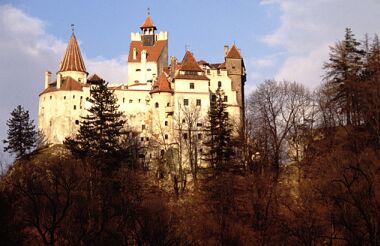
My more serious interesting fact is that Bran Castle in Transylvania (the region to the West of the Carpathians) is also known as Dracula's castle.

Here are some pretty pictures :)

Transylvania


File:Bran Castle.jpg
Bran Castle

Ooh and on one final note, they absolutely loved killing each other in Transylvania in the 14th century, Vlad Draul III's (Vlad the Impaler) older brother was buried alive. It sounds like they were all (well maybe not quite) as bad as each other. :S

Tuesday, 15 November 2011

Vampires :D

Vampires :D


1. The little vampire (2000)

A human kid called Tony, moves to Scotland from California, and gets bullied by his new class mates. After dreaming of Vampires, he meets a little vampire called Rudolph (who becomes his best friend) and his vampire sister Anna. Some evil guy wants to send Rudolph, Anna and his family to the underworld by getting hold of a mystical stone. This stone can also turn Rudolph, Anna and their family into humans. Because of Tony and his Dad's bravery, they kill the evil guy and the vampires are turned into humands. It was an epic film when I was 7 :)


2. The Vampyre (1819)

A guy called Aubrey has a mate called Lord Ruthven (characterised after Lord Byron). Wherever Aubrey goes with Lord Ruthven, bad things happen i.e. people die. The pair end up being attacked by bandits and Ruthven is mortally wounded, he makes Aubrey promsie not to tell anyone of his death for a year and a day. However.... when Aubrey returns to London he discovers Ruthven is there- He's still alive!!! Aubrey puts two and two together and realises Ruthven is a vampire! Duh, duh, duh!! Unfortunately, Ruthven starts to woo Aubrey's sister and he is powerless to do anything about it. A year and a day later when Aubrey is free to speak he rushes to tell his sister that her fiancee is a vampire but discovers her dead in a pool of blod, he was too late! 
Significance? The original vampire tale, sorts out the original characteristics of a vampire e.g. high status and intelligence. Interesting fact: Polidori wrote The Vampyre because of a challenge set by Lord Byron which Mary Shelley also accpeted resulting in her writing Frankenstein.

3. Varney the Vampire


Varney isn't quite as nice a vampire as his name may make his seem. What is particularly interesting about Varney is that he hates his condition, very similar to 'modern day' Vampire. He was cursed with vapirism after turning over a Royalist to Oliver Cromwell in the 1600s. It seems like the author wanted his audience to feel sympathetic towards Varney as they gradually learn more of his origins as a 'priest' and the unfortuante death of his son whom he kills during a fit of anger (after being changed into a vampire). I quite like Varney :D  

Monday, 7 November 2011

Faustus: funny or scary? (3/11/2011)

So, I've been pondering the question that Mr. Francis asked us to look into last week and I think the answer lies completly in the context of the production.

Historically, when Faustus was put on in Elizabethan times and the years following Faustus would undoubtedly scare the audience. I can only really think of one scene which might now be described as truly frightening (the last one) but the very concepts involved in Faustus, Lucifer and Hell would be all so real to an Elizabethan audience. No longer do the majority of the population believe that Faustus' fate is one that they too could endure, but back then most people believed that going to hell a place, "where we are tortured and remain forever" a possibility.  This prevelant Christian belief would have brought a terrorfiying realism to Faustus and I think that this would have caused people to have shivers down their spine. Because of the levels of belief held in the 1600s I would imagine that the play would be performed in a much darker manner. In the sceptical 21st century the concepts that forge the making of this play are not regarded with such seriousness, yet I am positive that an Elizabethan production of the play would have to present the seriousness of Faustus' actions completely- after all Faustus is as much of a warning as it is any other type of play. The humour that is written into the play acts as a light relief to the otherwise scary nature of the play, but it must be noted that Marlowe never makes light of what Faustus has done.

Nowadays, however, I think Faustus is more of a comic play. No longer does a 'life and death' realism have a grip of the play and the audience that view it. This allows more humour to creep in, which in turn grants a kind of 'comic license' to the actors who perform the various roles. The rise in the playing on humour in Faustus such as the scene where "[The Pope] cross[es himself] and Faustus hits him with a box of the ear." has to take a greater precedence in the play because the fear that once played a large part in the production is lesser. Why is it lesser? Well, not only because of the increasing levels of agnosticism and aetheism but also because people's expectations about what is scary have moved on too. Horror movies are what 21st century people watch when they want to be scared not Elizabethan plays. Unfortunately, Faustus can't quite keep a modern audience on the edge of their seat through horror alone and so it has somewhat morphed... into a comedy.

On a lighter note, just got a kindle- it is awesome :D

Thursday, 3 November 2011

So is Faustus a Goth? 1/11/2011

So we have beena sked to blog about whether Faustus is truly a Gothic character or a tragic one instead.
I would argue that he is a mixture of both as he has a number of tragic and gothic character traits:

Gothic Traits
  1. At the very start of the play Faustus has a strong passion for knowledge, particularly in the 'gothic' art of necromancy-dark magic. His desires for 'power', 'honor' and 'omnipotence' at the start of the play could be described as obsessive through the fact he sells his soul to the devil as a means of achieving them. What is tragic however is that once he has sold his soul, the passions and ambitions that Faustus held at the start of the play ebb away and he is content to be satisfied by Mephistopheles taking control and doing everything for him.
  2. Faustus is an intelligent man, this can be seen through his dismillas of great subjects of knowledge including 'law', 'medicine' and philosophy and belittling the works of the great masters of these subjects e.g. 'St Justinian'. Tragically by the end of the play he wishes he had never opened a book, 'never read book!'[act 5] showing that he recognizes his intelligence has caused his downfall.
  3. Linked to an idea of corruption- Mephistopheles corrupts Faustus throughout the playthrough: getting him to sell his soul and not allowing him to do the things that he desired when the bargain was made.
  4. Inhuman in some way- he sells his soul!
BIG TRAGIC TRAIT
  1. Hubris!!- Faustus' arrogance and pride causes him to sell his soul and prevents him from repenting at the end of the play.

Sunday, 30 October 2011

Looks like Rory wasn't a very good Mephistopheles :( (Missed lessons 18.10.2011)

Right, I am going to have to blog very, very, very quickly today as my internet is being incredibly tempremental and could die at any second. During the quick period that I have taken to research the productions of Faustus, (googled the reviews and 'sage history') I can now tell you a little about the productions of it.

Historically, according to the University of Warwick's English Literature dept (they have a Faustus database- impresive or what) the earliest productions of Faustus were between 1594-1597. Lord Admiral's men were the theatre troop that put it on at the Rose theatre- so there you have it Faustus at its earliest. Little is recorded about the production in Faustus' early years, I guess there wasn't a buzzing industry of arts critics in the 16th and 17th centuries. However following a revival in 1602, Faustus was on the stage for a long period during the 1600s. According to wikipedia in one 1932 production, two devils actually appeared on the stage! (Someone obviously had a really good sense of humour!)

Following links from the warwick website there are some reviews of productions of Faustus in the 20th Century, unfortunately there isn't access for non-Warwick students/ staff, I might see if I can look in the Times archives and comment later (when I know I have a secure internet connecion) on what they have said.

The most recent production of Faustus was this year. The play was staged at the Globe Theatre in London for the first time ever in its history. Unfortunately, it wasn't particularly well met by the criticis, Brian Logan from the Guardian wrote, "You leave feeling you have plumbed the contents of the theatre's wardrobe department, not the depths of the spiritual abyss." (Guardian, 24 June 2011) Logan picks up that a problem with the production is that, "The horrors to which he has pledged his soul, meanwhile, are weakly represented by Arthur Darvill's Mephistopheles, and by a Lucifer wearing silly facial hair."(Guardian, 24 June 2011) It may very well be that Arthur Darvill wasn't convincing, but then I have always thought that Mephistopheles was meant to be the subtle messenger of hell- not obviously evil or horrific, but a character that possesses a greater gold over Faustus as the play progresses.
Charles Spencer's review in The Telegraph is equally critical of the production, he describes Paul Hilton's Faustus as, "vocally underpowered" and says that Arthur Darvill is "woefully miscast as Mephistopheles"

Anyhow, better go now as I think the internet is on its last legs, just wanted to also mention that I saw the RSC's version of 'A Midsummer Night's Dream' down in Stratford at the weekend- my favourite Shakespeare production yet


Links to reviews (tried to get The Independent one too but internet wasn't coopertating)
http://www.guardian.co.uk/stage/2011/jun/24/doctor-faustus-review

http://www.telegraph.co.uk/culture/theatre/theatre-reviews/8597343/Doctor-Faustus-Shakespeares-Globe-review.html

Saturday, 15 October 2011

The Other Side of the Argument... or is it? (13/10/2011)

Not really blogged for a while so thought I was over due a post. This past week we have been examining the question 'How far do you agree that Faustus has fallen in grace by Act iv?'. When I initially wrote the essay on Thursday afternoon I decided to be non-controversial and agree with the question. However, when I went out of the room to discuss my work with Mr. Francis I realised that actually I completely disagreed that Fautsus had fallen in grace at all- I just wasn't confident in taking a stance that completely opposed the question. I'm going to use this blog to explain my actual position, and the one that I will take in June if the question comes up again.

The crux of my argument that Faustus doesn't fall from grace by act iv is basically that he was never a nice person to begin with. My understanding of 'falling from grace' is that one has to be in a morally superior position at the start and a much lower position by then end. If we look at Faustus however, he is clearly presented as an arrogant, obnoxious, aetheistic, rude man in act i. Plainly, this is not in any way, shape, or form a morally superior position. The Faustus in scene one is not at all the sort of man that anyone would particularly like to meet. If Faustus' characterisation in scene i is contrasted with his character in scene iv a definite change can however be spotted. Faustus is meeker, he has lost his arrogance and in many respects could be regarded as helpless e.g. his dependence on Mephi. The sharp edges of Fautsus' character in scene one have been worn down over the years follwing the selling of his soul and actually it could be argued that Faustus hasn't fallen from grace because his experiences have actually graced him with tiny little bit of humility.

Another point, although I've been told not to get hung up on it, is that 'fallen from grace'- like it or not- does have religious connotations. At the tiume that Faustus was written all of Christendom (and the H.R.E where the play is set) would have understood 'fallen from grace' to be falling from the will of God. I may be being pedantic but Faustus sells his soul in the first act, let's face it you can't show that you disagree more with God than that. Case closed by act one, not act iv, surely?

Or maybe not. The phrase 'fallen from grace' is ambigious, and as I've already pointed out my understandings of it lead to the question appearing quite frankly irrelevent/pointless. I don't think Fautsus falls from grace by act iv, if he does fall in the semantic sense it is in act i, otherwise he does not. There is however a character change in Faustus which is noticeable as the play progresses. His ambitions die. I may not like Faustus, but I would be mad to deny that it is his ambitions that are the life force behind the character. By the time that the play reaches act iv, they have been erroded away and replaced by melancholy acceptance that Fautsus is not destined for greatness but to act as a servant or jester- to entertain others. At least at the start of the place Fautsus has an interesting albeit despicable charcter, by Act iv he is completely void of any of the spark he once had. It's funny but the audience really do get to see the devil suck Faustus' soul from him through the play. I'm not sure whetehr this change in character can be called a fall from grace but whatever it is it is noticeable and it does happen to a large extent.

Sunday, 9 October 2011

Things aren't looking great for Fautsus (4/10/2011)

Last week Mr Francis asked us to consider the question, 'How does Faustus fall further in act 4?' I'm going to quite with my usual waffle at the start of blog posts and just get into answering that very question.

It is obvious even from the chorus that begins act 4 that Faustus has completely abandoned his ambitions, "of power, of honour, of omnipotence" that he presented in act one. Instead Faustus is content to be "feasted 'mongst his (Charles V) noblemen". No longer does Faustus crave to control the whole world as a kind of God, he is happy to settle for "fame spread forth in every land". In this sense, Faustus' character has fallen further in act 4 because the very ambitions that drove him to sell his soul to the devil (the ultimate sacrifice) are no longer present in him making the decision seem completely pointless. At this point I'd like to point out that I think, Marlowe was being very clever in his choice of Charles V as the Emporer that Faustus meets. Charles V was a man who fulfilled many of the ambitions that Faustus once held, controlling the majority of the discovered world at the time of his reign as King of Spain and Holy Roman Emporer. Marlowe's choice of Charles V to star opposite Faustus in this scene would therefore suggest that he was trying to emphasise the difference between Faustus' old ambitions and what he prepared for in scene 4.

Further evidence of Faustus falling in Act 4, can be found in the way that he suddenly discovers humility, declaring himself, "far inferior to the report men have published (of his skill with magic)". It is strange in a sense that Faustus loses his arrogance, a negative character trait, after he sells his soul to evil as one might have expected him to seek further into his ungodly character traits shown at the start of the play. I think that Faustus acknowledgement that his skills actually aren't that great as well as the fact he recognizes he is not equal to Charles V, "...nothing answerable to the honour of your Imperial Majesty" show that he has lost faith in himself, which in itself surely evidence that he has fallen further.

Interestingly enough, throughout the scene the people that Faustus meets become of gradually lower and lower status. Faustus initally, uses his sorcery to please Charles V by summoning the spirit of Alexander the Great, yet by the end of [4.2] he has been asked to summon some grapes for a Duchess. The difference in status between the individuals is obviously great, one is one of the greatest King's ever and the other a mere woman. However it is the difference in the tasks assigned to Faustus that show a real marked difference, summoning the ghost of Alexander the Great seems much more complex then conjuring up some grapes. It is almost as if by the end of Act 4 not only have Faustus' ambitions faded but also his fame has too.

Very quickly, I would just like to finally point out that throughout scene 4 it is Mephistopheles that does the actual magic, Faustus merely tells him to do so. If one reflects back to the beginning of the play Fautus himself managed to summon Mephistopheles yet it seems that even though he sold his soul to the devil to become better at magic, his use of magic has actually decreased. A bitter irony. Note also, Faustus crying out to Mephistopheles, "Help, Mephistopheles!" when a rogue man pulls Faustus leg off (really didn't get what was going on there- literal or figurative?). It strikes me that Faustus' reliance on Mephistopheles to do everything for him is arguably further evidence of his fall as he is no longer able to do anything for himself.